How CHU de Québec-Université Laval turns patient comments into action with AI
Patient experience and PREMs
Francis Robichaud
Lime Health Founder and CEO

Summary: every year, thousands of patients at CHU de Québec-Université Laval leave comments in their patient experience questionnaires (PREMs, Patient-Reported Experience Measures). To make use of this volume, the CHU deployed, in partnership with Lime Health, an artificial intelligence (AI) feature that analyzes these comments and automatically generates a qualitative summary sent to managers. According to the CHU, 48% of managers took concrete action based on the comments they received, and 70% feel comfortable sharing them with their colleagues.
Patient comments are often the richest part of a patient experience questionnaire, whether they are left in a comment box or in answer to an open-ended question. This is where patients describe what reassured them, what worried them and what could have been done differently.
They are also the hardest part to use. How do you read thousands of verbatim comments, draw clear priorities from them and get them to the right teams, without spending weeks on it?
CHU de Québec-Université Laval took on this challenge. With the qualitative summary developed by Lime Health, the voice of patients now reaches managers directly, in a clear, action-ready format.
Thousands of comments, little time to read them
For several years, CHU de Québec has measured patient experience systematically. PREMs questionnaires are sent automatically by the Lime platform across several care pathways.
This approach generates a large volume of qualitative data. Numerical scores can be read at a glance. Patient comments, on the other hand, must be read, sorted and interpreted one by one.
The problem goes beyond time. Manual analysis is slow, costly and often late. By the time the summary finally reaches managers, the moment to act has sometimes passed. Part of the patient voice therefore goes unused. (See also: how qualitative data transforms patient experience.)
Patient comments are a goldmine of information. But you still need to be able to read them at scale.
Putting AI to work for the patient voice
To meet this challenge, we at Lime Health developed a new artificial intelligence feature. It combines natural language processing (NLP) and generative AI.
The goal: turn thousands of unstructured comments into information managers can use right away. The feature is built into the Lime platform, which the CHU was already using to collect PREMs. No new tool to learn.
The AI does not decide for the teams. It sorts and summarizes. Managers validate, interpret and choose the actions to take. The tool is not intended for clinical diagnosis or individual prediction: it supports continuous improvement.
The rollout was gradual, sector by sector. This allowed teams to take ownership of the tool and adapt it to their operational needs.
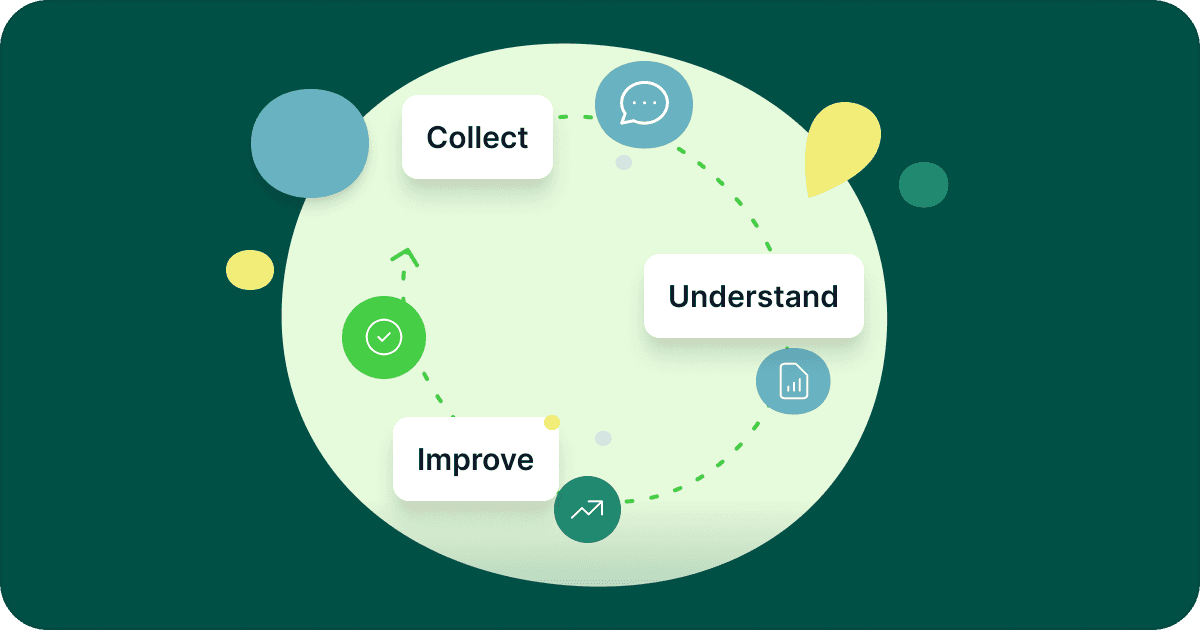
The Lime features behind the transformation
1. A summary of comments, generated in one click
In one click, the Lime platform analyzes thousands of comments and produces a qualitative summary organized into clear sections:
Strengths: what patients appreciate most;
Areas for improvement: the most frequent pain points;
Trends: the topics that stand out, recurring or isolated;
Overall sentiment: the general tone of comments, from very positive to very negative;
Praise, suggestions and potential issues: a summary by type of comment.
Potential issues are highlighted so they can be addressed first. These are comments where the patient’s health or safety may have been compromised.
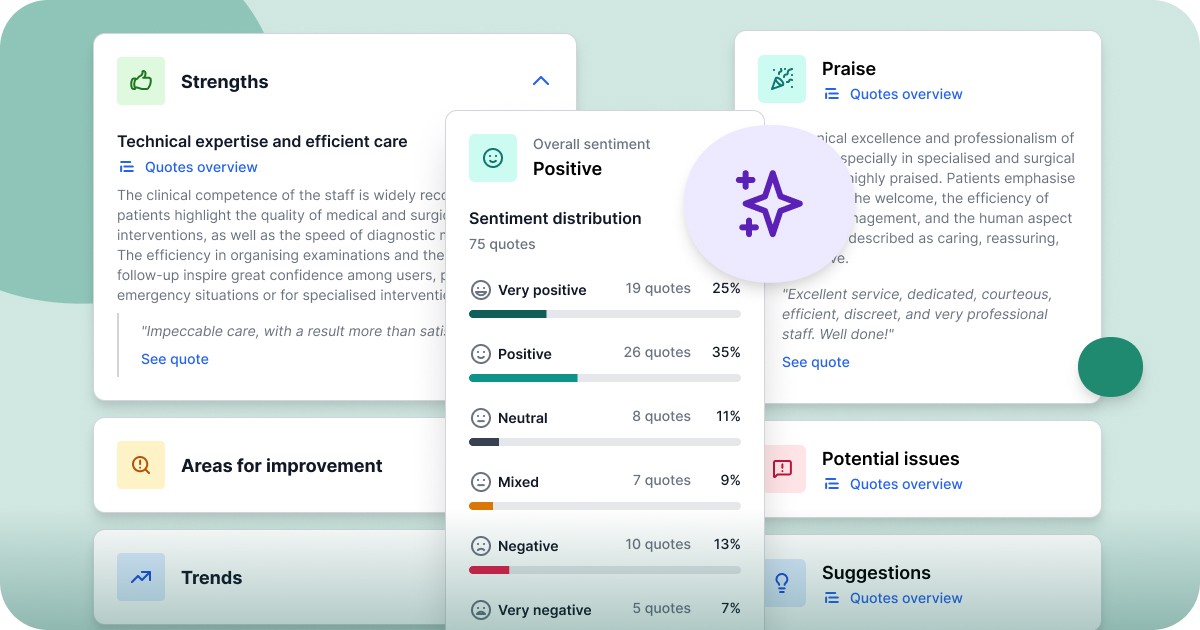
Caption: “A clear summary of strengths and improvement opportunities, ready for team discussion.” (Fictitious data)
2. Every finding can be traced back to patients’ own words
Each point in the summary is linked to the comments that support it. Managers can review the original verbatims and validate the information before acting.
Caption: “Every finding points back to patients’ own words.” (Fictitious data)
3. Reports sent automatically to managers
Reports are emailed automatically to the relevant managers, at the frequency and for the period selected. Each facility decides which managers receive which results.
At the CHU, these reports are built into existing processes: management huddles (scrums), continuous improvement meetings and quality monitoring.
Results that speak for themselves
Since the rollout, data that was once underused, for lack of time to analyze it, is now available to a large number of managers. According to the CHU:
✅ 48% of managers took concrete action based on the comments they received;
✅ 70% feel comfortable sharing the feedback collected with their colleagues;
✅ the manual effort involved in summarizing comments has dropped considerably;
✅ information reaches clinical sectors faster.
In practice, managers use the reports to prioritize their actions, engage the right staff and recognize their teams’ good practices.
AI does not replace listening. It makes listening possible at scale.
What this project fundamentally changes
Beyond the efficiency gains, this project changes the place of the patient voice in management. It becomes strategic data, on par with clinical, financial and operational indicators.
This is an important step for a facility that has made value-based healthcare (VBHC) a priority. The CHU applies the same approach in orthopaedic surgery, where it uses PROMs to monitor patients waiting for surgery.
What if your facility did the same?
The AI qualitative summary is available to every facility that measures patient experience with Lime Health. In medicine, surgery, the emergency department or elsewhere, the principle is the same: collect the patient voice, make it readable quickly and enable teams to act.
Want to see how your patients’ comments could become clear action items? Let’s talk.
FAQ: AI and patient comments
What is a qualitative summary?
It is a synthesis generated automatically from patient comments, whether they are left in a comment box or in answer to an open-ended question. It presents strengths, areas for improvement, trends and overall sentiment in a format that can be read in a few minutes.
What are PREMs?
PREMs (Patient-Reported Experience Measures) are questionnaires completed by patients about their experience of care: communication, information received, comfort and coordination. They often include open-ended questions where patients can express themselves freely.
What technology is used?
The feature combines natural language processing (NLP) and generative AI. It was developed by Lime Health and is built into the Lime platform for measuring patient experience.
Does AI replace human analysis?
No. The AI sorts and summarizes. Managers validate the information and decide what actions to take. Every finding in the summary is linked to the original comments. The tool makes no diagnosis and no individual prediction.
How do managers receive the summary?
Reports are sent to them automatically by email, at the frequency and for the period selected. Each facility decides which managers receive which results.
What results has CHU de Québec achieved?
According to the CHU, 48% of managers took concrete action based on the comments they received, and 70% feel comfortable sharing them with their colleagues. The manual effort involved in summarizing comments has also dropped considerably.
How are the summaries used day to day?
At CHU de Québec, they are built into management huddles (scrums), continuous improvement meetings and quality monitoring.